Erasmus Mundus Scholarship: Europe's €30 Lakh Golden Ticket for Indian Students
Complete Guide | Application Strategy | Success Tips by Voyager Compass Consultancy LLP
- October 31, 2025
- 3,7916:23 am
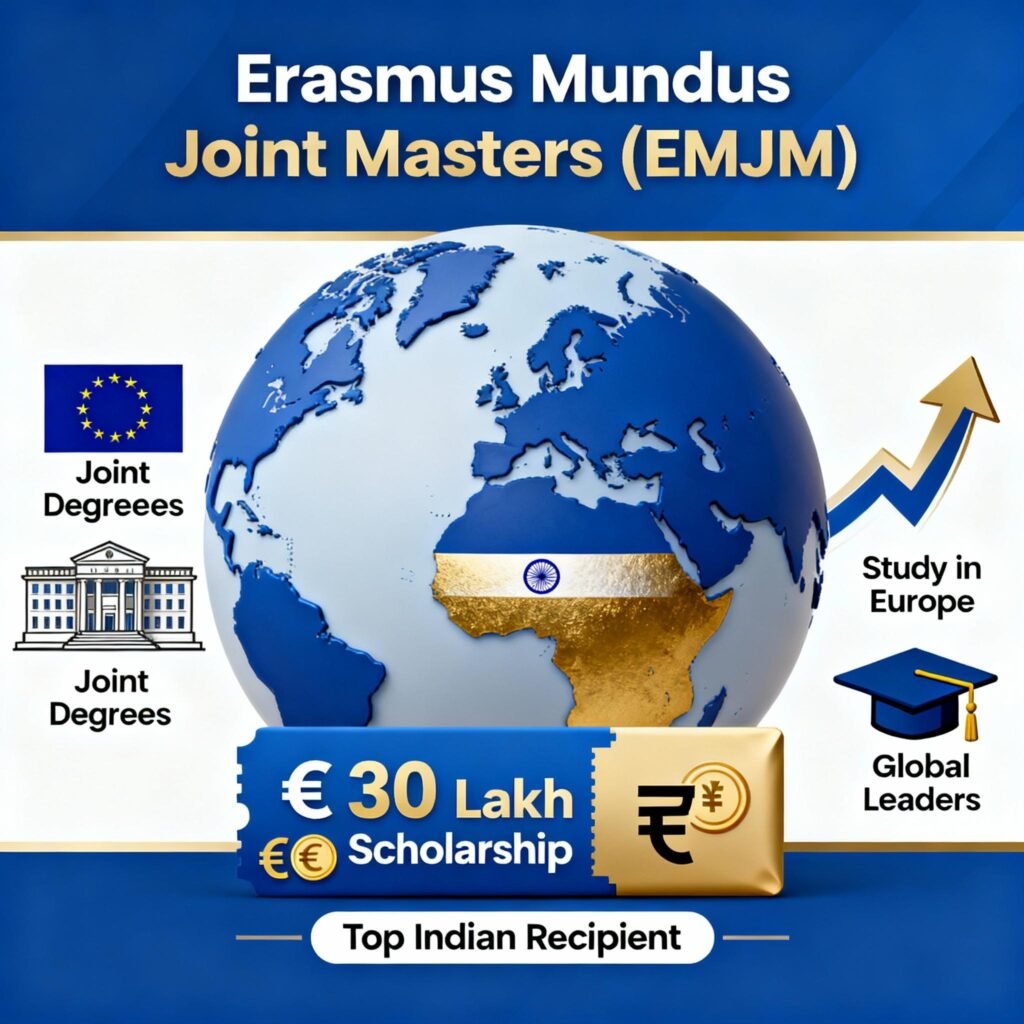
The Erasmus Mundus Joint Masters Scholarship isn’t merely a financial award—it’s a transformative opportunity that reshapes careers, broadens perspectives, and creates global leaders. Funded by the European Union, this prestigious scholarship covers everything: a generous €1,400 monthly stipend, full tuition fees, travel expenses, health insurance, and more, totaling over ₹30 lakhs for 2 years of study across multiple European universities.
For Indian students, this is the golden ticket to world-class education without the burden of debt.
- 146 Indian students awarded in 2024 (75 women, 71 men)
- 101 Indian students awarded in 2025–27 academic cycle
- 2,199+ Indian scholars since the program’s inception in 2004
- 6% of all global recipients—the highest proportion outside Europe
- Over 80,000 Indian students studying in Europe, reflecting growing institutional trust
- Joint or Multiple Degrees from 2–4 top European universities across multiple countries
- Global Alumni Network of 36,600+ scholars across 137 countries
- Post-Study Work Visas valid for 1–3 years across Europe
- Zero Debt with maximum professional impact
- Curriculum Diversity spanning engineering, business, social sciences, law, and more
- Research Opportunities in cutting-edge fields (AI, sustainability, public policy, etc.)
- Strong academic backgrounds from Indian institutes with rigorous curricula
- English proficiency enabling seamless European study
- Cultural adaptability making Indian students effective global citizens
- Professional ambition driving strategic career planning
- Applications Open: October 2025
- Deadlines: December 1, 2025 – January 31, 2026
- Results: March 2026
- Program Starts: September 2026
- Bachelor’s degree completed (minimum 180 ECTS credits) or currently enrolled in final year with expected completion before September 2026
- Certified copies of degree certificates and transcripts (English translation required)
- Academic CGPA typically 3.0 or higher (varies by program)
- English language certificate (IELTS, TOEFL, PTE, or Cambridge)
- Minimum IELTS: 6.5 band score (Program standard)
- Minimum TOEFL iBT: 87–90 (Program dependent)
- Some programs accept Medium of Instruction (MOI) certificates if bachelor’s was entirely taught in English
- Valid passport (with 6+ months validity recommended)
- CV in Europass format (2 pages maximum)
- Letter of Motivation/Statement of Purpose (600–800 words)
- 2–3 recommendation letters (at least one from academic referee)
- Proof of residence (self-declaration form)
- Indian nationals are treated as “third-country students” (Partner Country classification)
- No restrictions on Indian applications
- Students who have spent more than 12 months in a European country in the last 5 years are classified as “Programme country” students, affecting scholarship allocation
- Double nationality must be declared under one nationality only
- Work experience is optional but highly valuable for competitive positioning
- Publications or research papers (strong advantage if available)
- GMAT/GRE scores (rarely required, but strengthens applications)
- Language certifications beyond English
- Most critical document
- Demonstrate program-specific knowledge
- Show clear career trajectory
- Connect your background to program objectives
- In original language AND English translation
- Certified by authorized translator
- PDF format, scanned in color
- Complete academic record from bachelor’s
- Diploma supplement (if available)
- Certified English translation
- Shows all grades obtained
- PDF format from referees
- Preferably from academic professors
- One can be from professional mentor/employer
- Include referee’s credentials (LinkedIn, Google Scholar ID)
- Official TOEFL, IELTS, or PTE report
- Must be valid (typically 2 years from test date)
- Direct from testing agency preferred
- Clear scan in PDF
- Biodata page visible
- 2 pages maximum
- Chronological format preferred
- Highlights relevant experience and skills
- Employment certificates (last 5 years of work history)
- Research papers or publications
- Conference participation certificates
- Relevant workshop/course certificates
- Language proficiency in additional European languages
- Awards, honors, or recognitions
- Start with a compelling hook about your field
- Introduce your academic journey
- Connect to program relevance
- Example: “My research into sustainable urban development during my bachelor’s thesis revealed a critical gap in policy frameworks—a gap I aim to address through rigorous study and international collaboration.”
- Highlight relevant coursework and achievements
- Showcase skills gained from projects, internships
- Connect past experiences to program
- Use specific examples, not generic statements
- Quantify achievements where possible
- Demonstrate deep research of the program
- Name specific courses that excite you
- Explain mobility strategy (why these 2–3 universities)
- Show understanding of program pedagogy
- Highlight unique opportunities the program offers
- Articulate specific, measurable career objectives
- Explain how this program bridges gap to goals
- Show commitment to giving back to community
- Project 5–10 year vision
- Demonstrate alignment with EU priorities (sustainability, AI, public policy, etc.)
- Reaffirm motivation and commitment
- Express enthusiasm for international academic community
- End on forward-looking note
- Show gratitude for consideration
- Research programs thoroughly before writing
- Use specific examples from your experience
- Show clear career progression logic
- Demonstrate knowledge of program consortium
- Proofread multiple times
- Use active voice and confident tone
- Connect your story to program needs
- Show cultural awareness and adaptability
- Write generic statements applicable to any program
- Tell childhood dreams or emotional backstories
- Use overly complex language
- Focus on financial hardship (merit-based, not need-based)
- Make spelling or grammatical errors
- Exceed word limits
- Copy templates or AI-generated content
- Forget to personalize for each program
- Research each program in detail
- Reference specific courses, professors, research groups
- Explain why THIS consortium over others
- Show familiarity with each university’s strengths
- Create a compelling arc: Bachelor’s → Master’s → Career
- Show logical progression of interests
- Link each experience to next step
- Demonstrate how program bridges gap
- Start 2–3 months before deadline
- Complete first draft 4–6 weeks early
- Get feedback from mentors, peers, professors
- Proofread at least 3 times
- Test document formatting before upload
- Apply to programs with strong Indian track records
- Match programs to your specific interests
- Ensure each program has realistic acceptance probability
- Research alumni success stories
- Verify program reputation in your field
- Select recommenders who know you well
- Provide them detailed information about program
- Share your Statement of Purpose with them
- Request specific examples and achievements
- Allow adequate time for thoughtful composition
- One letter from professional mentor + one academic
- Use official Document Checklist Tool from each program
- Verify all documents are certified and English-translated
- Ensure all file formats are correct (<2MB PDFs)
- Include all mandatory attachments
- Double-check file naming conventions
- Carefully read each program’s application page
- Verify eligibility before investing effort
- Check for program-specific essays or questions
- Note any additional requirements (portfolio, test scores)
- Contact program coordinators with questions
- Analyze your academic background, career goals, and strengths
- Cross-reference against 150+ Erasmus Mundus programs
- Identify 2–3 programs with highest probability of success
- Research consortium universities and specializations
- Verify alignment with your career trajectory
- Craft compelling, authentic narratives specific to each program
- Research program curriculum, faculty, and research focus
- Highlight unique experiences and achievements
- Create clear career progression narrative
- Ensure 600–800 word compelling storytelling
- Multiple revision cycles for perfection
- Guide selection of optimal recommenders
- Provide recommenders detailed program information
- Ensure letters highlight program-specific strengths
- Coordinate timing and submission
- Verify letters showcase specific achievements
- Verify all certifications and translations
- Ensure proper formatting and file sizes
- Check compliance with program requirements
- Create organized submission packages
- Submit well before deadlines (15–20 days early)
- Mock interview sessions with expert coaches
- Practice responding to common questions
- Develop compelling verbal narratives
- Build confidence and presence
- Provide feedback and refinement
- Visa guidance for Schengen visa applications
- Pre-departure orientation and logistics
- Alumni network connections and mentorship
- Accommodation and relocation assistance
- EMJM in Advanced Materials Science
- EMJM in Computational Engineering
- EMJM in Data Science & Analytics
- EMJM in Renewable Energy Engineering
- EMJM in Strategic Marketing
- EMJM in International Business
- EMJM in Financial Analysis
- EMJM in Innovation & Entrepreneurship
- EMJM in Sustainability & Climate Action (Focus on EU priorities)
- EMJM in Food Security & Nutrition
- EMJM in Intellectual Property Law
| Component | Amount (EUR) | Annual (EUR) | 2-Year Total (₹) |
|---|---|---|---|
| Monthly Living Allowance | €1,400 | €16,800 | ₹28,00,000 |
| Tuition Fee Coverage | Full | Full | Included |
| One-time Allowance | €4,000 | – | ₹3,33,333 |
| Health & Accident Insurance | Full coverage | Included | Included |
| Total Scholarship Value | ₹30,00,000+ | ||
- Personal travel beyond program allowance
- Additional language courses (though often free)
- Accommodation (stipend covers this)
- Visa fees (though minimal for Schengen)
- Personal expenses beyond living costs
Erasmus Mundus graduates enjoy unprecedented work visa advantages:
Denmark: 3-year job-seeking permit after graduation
France: Graduate work visa up to 1 year
Germany: 18-month work visa for job search
Italy: Work visa aligned with study duration
Spain: Residency options for graduates
- Pursued EMJM in Renewable Energy at TU Delft + KTH Stockholm
- Published 3 peer-reviewed papers during studies
- Secured PhD position at Max Planck Institute, Germany
- Now leading sustainable energy research with €2M funding
- Completed EMJM in Strategic Marketing at ESSEC + HEC Paris
- Founded EdTech startup during studies
- Raised €1.5M Series A funding
- Employs 50+ people across 3 European countries
- Studied EMJM in International Law + Human Rights at University of Strasbourg
- Interned at European Parliament
- Joined UN Office on Drugs & Crime
- Now shapes international policy on sustainable development
- 40% of rejections due to generic, non-specific statements
- 25% due to weak recommendation letters (generic content)
- 15% due to course-background misalignment
- 12% due to incomplete or incorrect documentation
- 8% due to inferior English language scores
- Identify 50+ Erasmus Mundus programs across fields
- Research Indian acceptance rates by program
- Create shortlist of 5–7 programs
- Download program catalogs and requirements
- Take IELTS/TOEFL if needed (must have results before deadline)
- Gather official degree certificates and transcripts
- Request certified English translations
- Identify 2–3 strong recommenders
- Access each program’s application portal
- Download Document Checklist Tool
- Create master checklist of ALL requirements
- Organize all documents by program
- Draft Statement of Purpose (3–4 iterations)
- Share with mentors for feedback
- Brief recommenders about programs and deadlines
- Create Europass CV in required format
- Finalize all documents
- Scan and format all PDFs
- Verify file sizes and naming conventions
- Create backup copies of everything
- Submit applications to 2–3 programs with January 31 deadline
- Keep copies of confirmation pages
- Note application reference numbers
- Track submission status
- Complete remaining applications
- Follow up with recommenders if letters not submitted
- Prepare for potential interviews
- Document all application dates
Interview Preparation: Programs That Interview
- “Tell us about your research or project work during bachelor’s.”
- “Why do you want to study this specific program?”
- “How does this master’s align with your career goals?”
- “What attracts you to studying in Europe?”
- “Describe a challenge you overcame and what you learned.”
- “How will you contribute to our diverse cohort?”
- “What are your career plans after graduation?”
- “Why should we select you over other candidates?”
- Practice with video recording yourself
- Research program faculty and research areas
- Prepare specific examples from your work
- Show genuine enthusiasm for program
- Speak clearly and with confidence
- Ask thoughtful questions about program
- Dress professionally despite video format
- Test technology 24 hours before interview
- Analysis of 20+ years of Erasmus Mundus selection patterns
- Program-specific acceptance rate research
- Indian applicant trend analysis
- Strategic positioning for maximum competitiveness
- One-on-one guidance from Erasmus Mundus experts
- No templates—every application reflects YOUR story
- Iterative refinement and feedback cycles
- Continuous support through entire process
3. Proven Success Record
- Indian students successfully placed across diverse programs
- Published researchers in peer-reviewed journals
- Entrepreneurs securing European funding
- Policy advocates influencing international decisions
- Multiple scholarship recipients annually
- From profile assessment to visa guidance
- Post-selection preparation and orientation
- Alumni network connections in Europe
- Pre-departure logistics and accommodation
The Erasmus Mundus Joint Masters Scholarship represents more than financial support—it’s an investment in intellectual excellence, cross-cultural competence, and global leadership. For Indian students, this golden ticket combines world-class education, international credentials, and career acceleration – all without debt.
- Visit the official Erasmus Mundus catalogue at erasmus-plus.ec.europa.eu
- Shortlist 3–5 programs aligned with your goals
- Contact Voyager Compass Consultancy LLP for personalized profile assessment
- Begin Statement of Purpose drafting immediately
What does EMJM stand for?
What is the Erasmus Mundus Joint Masters Scholarship?
Who is eligible for the EMJM scholarship?
How competitive is the Erasmus Mundus scholarship?
What degrees are awarded after completing an EMJM program?
How long does the EMJM program last?
What documents are required for the application?
Can I apply for multiple EMJM programs simultaneously?
What financial support does the scholarship provide?
What career and post-study opportunities does EMJM offer?
How do I write a successful statement of purpose for EMJM?
How do I avoid common application mistakes?
When do applications open and close?
Where can I find official EMJM program listings and further details?
Voyager Compass Consultancy LLP Beyond Success, We Build Legacies